
School Admission Checklist for Parents
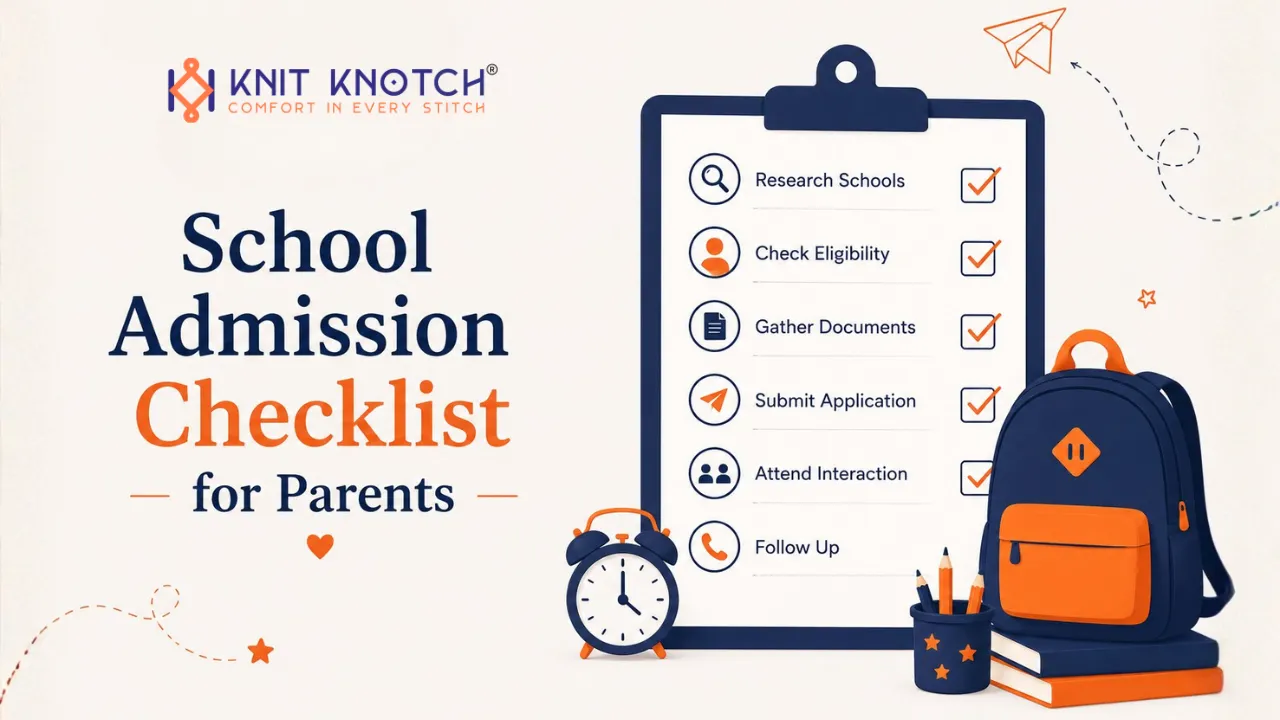
Starting the school admission journey? This step-by-step school admission checklist for parents covers when to start, how to shortlist schools, the documents you'll need, fees and deadlines, and how to get your child ready for day one.
School Admission Checklist for Parents
Getting your child into school can feel like a project of its own. This step-by-step checklist keeps the whole thing calm and organised — from shortlisting schools to gathering documents to getting your little one ready for day one.
01 Start earlier than you think
The single most common mistake is starting late. Many schools open admissions six months to a year before the academic year, and the good ones fill up fast. Begin by noting when your shortlisted schools open and close their forms, and work backwards from there. Giving yourself a head start means you're choosing calmly rather than scrambling at the last minute.
02 Shortlist the right schools
Before any paperwork, decide where you actually want your child to go. Weigh up the things that will matter every single day, not just on a tour: how far the school is from home, the board it follows, the fee structure, class sizes, safety, and what other parents honestly say about it. Visit if you can. A school can look perfect on a website and feel completely different in person.
If you're considering admission under the Right to Education quota or a particular board, read the official rules directly. India's Ministry of Education and the relevant board, such as CBSE, publish the current guidelines, which can change year to year.
03 Get the documents ready
This is the part that trips most people up, so gather everything early and keep both originals and photocopies in one folder. Requirements vary by school, but the core list rarely changes much.
The document checklist
- Child's birth certificate (the most commonly required proof of age).
- Address proof such as Aadhaar, a utility bill or rent agreement.
- Passport-size photographs of the child, and sometimes the parents.
- Aadhaar cards for the child and both parents.
- Immunisation or medical record showing vaccinations are up to date.
- Transfer certificate from the previous school, for children changing schools.
- Quota documents like income or category certificates, if you're applying under a reserved category.
Always double-check the specific school's list, since some ask for extras. Keeping a couple of spare photocopies of everything saves a return trip later.
04 Fill the forms and track deadlines
Application forms can be online, offline, or both. Fill them carefully, since a small error can hold up the whole process, and note every deadline somewhere you'll actually see it. If you're applying to more than one school, a simple list of each school's form date, fee and submission method keeps it all straight in your head.
05 Prepare for the interaction
Many schools have a short interaction with the child, the parents, or both. It isn't an exam, whatever the nerves tell you. They're usually just getting a feel for the child and the family. Keep your child relaxed, answer honestly, and don't over-coach a small person into reciting things. Schools can spot a rehearsed child a mile off, and a happy, comfortable one always comes across better.
"The interaction isn't a test to pass. It's a conversation, and a relaxed, happy child makes a far better impression than a rehearsed one."
06 Sort out fees and confirm the seat
Once you're offered a place, read the fee structure properly, including admission fees, term fees, and any extras for transport or activities. Confirm the seat within the deadline, since a delay can mean losing it. Keep every receipt and acknowledgement together with your document folder.
07 Get your child ready for day one
The paperwork is only half the job. The other half is helping your child feel ready and excited rather than anxious. Talk about school in a warm, positive way, ease into an earlier wake-up routine, and practise the small independence skills that make a big difference, like using the toilet alone and opening their own lunch box.
The practical comforts matter too. A familiar, healthy lunch helps a nervous tummy settle, and our healthy lunch box ideas are a good place to start. Comfortable clothes make the day easier as well, since a child who isn't fidgeting with a stiff collar can actually focus. If you're buying uniforms or everyday wear, our kids size chart helps you get the fit right, and there's more on why comfort matters for school-age kids.
Frequently asked questions
Get them school-ready in comfort
KnitKnotch makes soft cotton everyday wear for boys, girls and toddlers — breathable, easy to move in, and comfortable enough for a full school day. Most of it under Rs500.
Shop Everyday Wear